Specialized Reinforcement Systems: Tie-Rod vs. Flat-Tie
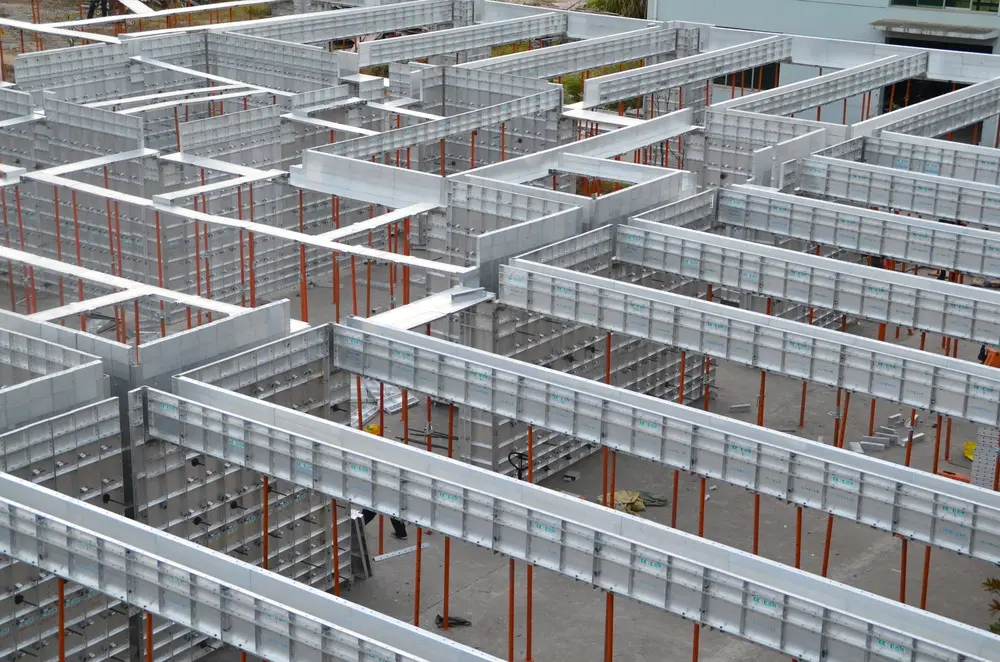
To adapt to diverse architectural designs, varying wall thicknesses, and regional labor habits, GETO offers two primary reinforcement methodologies. Understanding the distinction between these systems is crucial for structural engineers and procurement specialists seeking to optimize both cost and construction speed.
The Tie-Rod System
The tie-rod system is a traditional reinforcement method that has been used for decades in concrete formwork worldwide. It has a proven track record and remains the preferred choice for many heavy-duty applications.
| Feature | Description |
| Mechanism | Uses high-strength steel rods that pass through the entire wall thickness, secured with threaded nuts and plastic or metal cones on both sides of the formwork. |
| Application | Ideal for complex structures and projects where wall thickness exceeds聽400mm. Commonly used for shear walls, elevator shafts, retaining walls, and thick infrastructure walls up to 1000mm. |
| Surface Finish | Leaves small conical holes (20-30mm diameter) in the wall surface after stripping. These holes are easily patched with non-shrink grout. |
| Advantages | Delivers an exceptionally smooth forming effect. Extremely high lateral pressure resistance, suitable for tall pours (e.g., 5m+ wall height). Highly adaptable for refurbishment projects with varying structural geometries. |
The Flat-Tie System
The flat-tie system is a more recent innovation that has gained significant popularity in high-rise residential construction, particularly in markets with high labor costs or where unskilled workers are common.
| Feature | Description |
| Mechanism | Uses flat, thin steel ties (2-3mm thick, 30-40mm wide) that are inserted vertically between the edge profiles of adjacent aluminium panels. No drilling through the panel face is required. The ties are secured with wedges or pins. |
| Application | Ideal for standard residential walls (100–250mm). Most commonly used for walls between 150mm and 200mm thick. |
| Surface Finish | Leaves no holes in the concrete surface. The portion of the tie that extends through the wall is snapped off or cut, leaving a clean, hole-free finish. |
| Advantages | Designed to be more efficient, requiring no drilling through the panels themselves. It uses fewer accessories and is often preferred in international markets due to its simplified installation workload and excellent vertical casting effect. Faster installation, no hole-patching required, saving labor and patching materials. |
GETO provides both systems as fully integrated parts of its formwork offering, allowing clients to choose based on specific wall thickness, labor skill level, and project schedule requirements.