How Does Automatic Hydraulic Climbing Formwork Work
What is Automatic Hydraulic Climbing Formwork
Automatic Hydraulic Climbing Formwork—also known as the fully automatic hydraulic climbing formwork system—is a comprehensive piece of construction equipment that integrates the formwork panels, support scaffolding, hydraulic power units, operating platforms, and safety guardrails into a single unified system. By anchoring itself to the concrete structure that has already been poured and cured, the system utilizes hydraulic cylinders as its power source to enable the formwork and scaffolding to climb upward, layer by layer, as the building rises.
This is not merely a simple formwork tool; it represents a pinnacle of modern, high-end formwork systems—embodying a high degree of integration in terms of construction industrialization and mechanization.
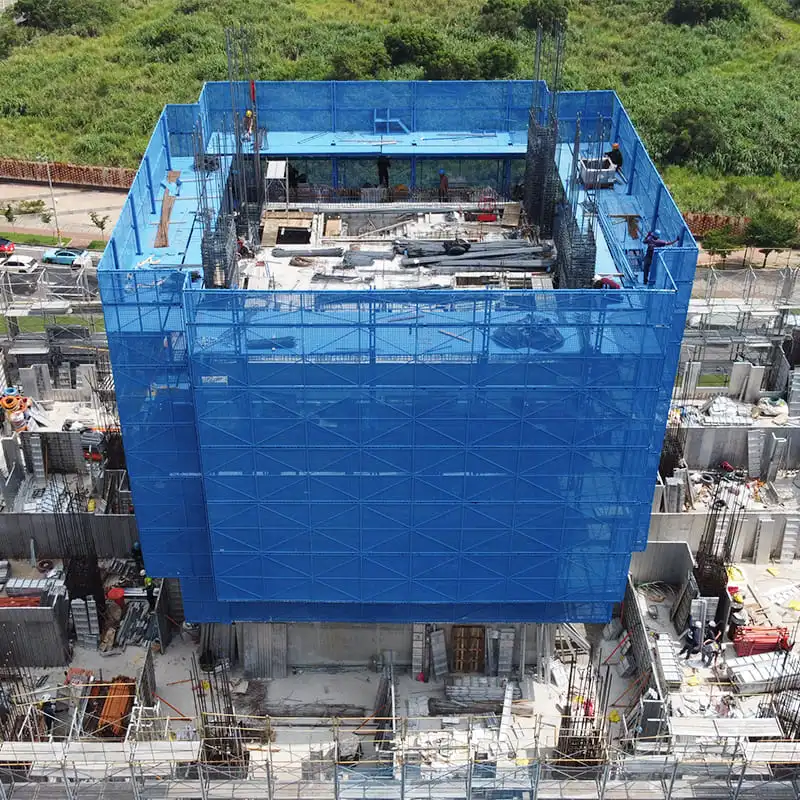
How Does Automatic Hydraulic Climbing Formwork Work?
Basic Working Principles
The core mechanism of hydraulic climbing formwork lies in its "alternating climbing" action. Simply put, the system consists of two main components: "climbing guide rails" and a "climbing frame structure." During an operational cycle, the guide rails and the frame structure serve as mutual supports for one another:
· When the frame structure is fixed in place, hydraulic cylinders drive the guide rails to slide upward.
· Once the guide rails are fixed and locked securely onto the concrete structure, the hydraulic cylinders then drive the entire frame structure (along with the formwork panels and working platforms) to climb upward along the guide rails.
This repetitive, cyclical motion makes the entire formwork operation process resemble a rock climber using their limbs in alternation to ascend.
Key Operational Process
A typical construction workflow for hydraulic climbing formwork is as follows:
Step 1: Initial Installation. Before the concrete for the ground floor (or base level) is poured, the guide rails and frame structure are installed onto pre-embedded anchor components.
Step 2: Concrete Pouring. The formwork panels are closed (assembled), and the concrete pouring process is carried out.
Step 3: Stripping and Cleaning. Once the concrete strength reaches the required level (typically 10–15 MPa), the stripping mechanism is activated to retract the formwork panels, followed by cleaning of the formwork surfaces.
Step 4: Guide Rail Lifting. The guide rails are unlocked; the hydraulic system is activated to lift the rails upward by one story height, after which they are locked into their new position.
Step 5: Frame Climbing. The hydraulic system is activated again to drive the entire frame structure (including the platforms and formwork panels) to climb upward along the guide rails to the predetermined elevation.
Step 6: Positioning and Securing. Once the frame structure is in place, precise alignment is performed; the structure is then locked down, and the formwork panels are closed in preparation for the next concrete pour.
Components of Formwork System
An efficient formwork system relies on the coordinated interaction of various precision-engineered components:
· Hydraulic Lifting System: Comprising a hydraulic pump station, high-pressure oil hoses, a synchronized control valve group, and the core hydraulic cylinders. This system serves as the primary power source for the entire assembly.
· Main Frame Structure: Consisting of load-bearing platforms and supporting frames, this structure supports the weight of the formwork panels and the live loads associated with construction activities.
· Guide Rails and Attachment System: The guide rails serve as the climbing path, while the attachment brackets transfer the entire system's immense load to the building's main structural frame.
· Control System: Modern hydraulic climbing formwork systems typically employ automated synchronous control to keep multiple hydraulic cylinders level during climbing, preventing the scaffolding frame from tilting.
· Protection System: Fully enclosed steel or aluminum protective screens ensure the safety of personnel working at high elevations.